
In one of the most sacred and pivotal moments in history, it was the women who came.
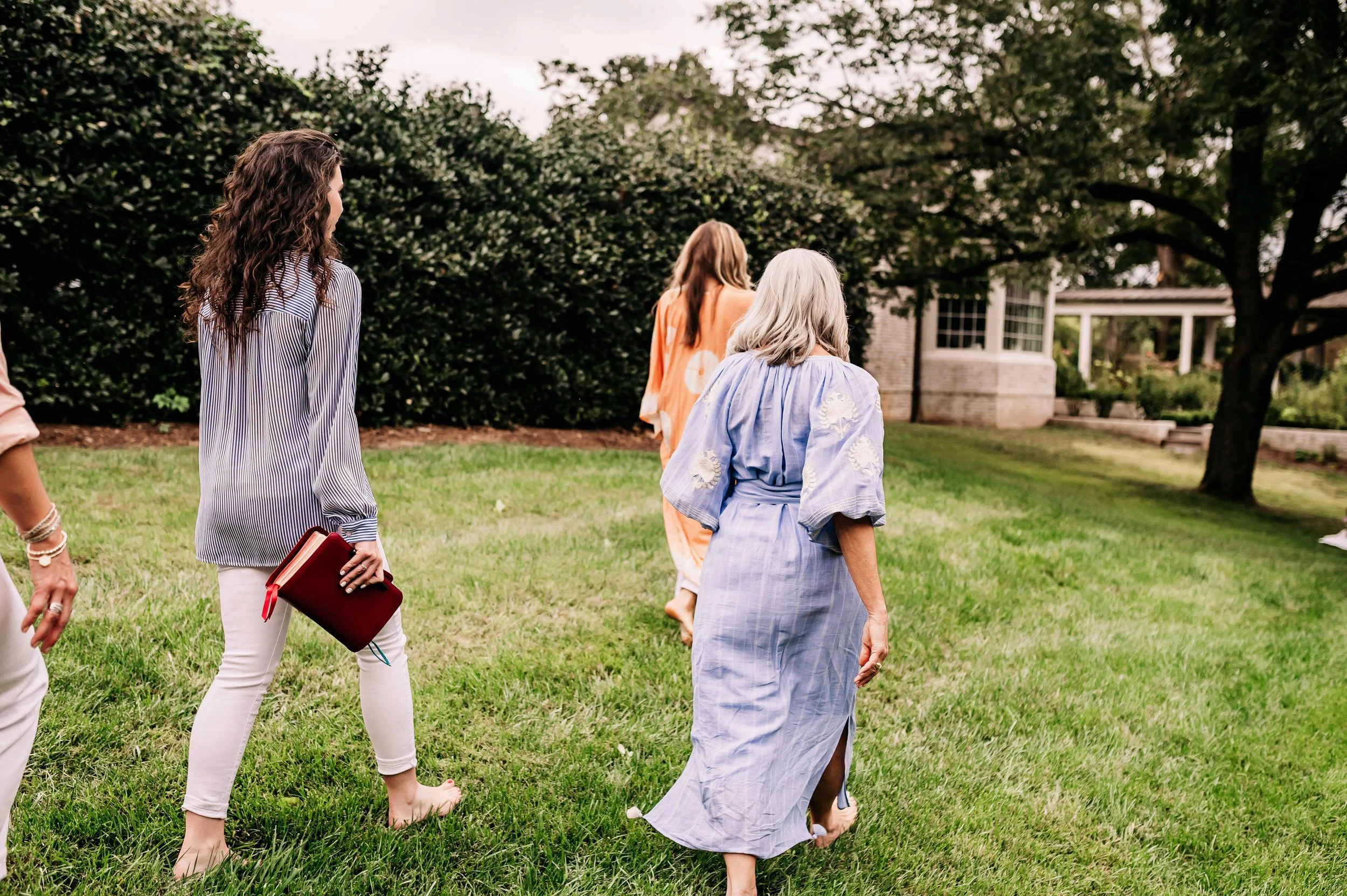
They had followed Jesus. They had ministered to Him. They had stayed when others fled. They stood near the cross, watching, grieving, risking their own safety simply to remain near Him. Their devotion did not diminish when things became costly or unclear.
And when it was over, when it seemed like death had the final word, they did the next faithful thing they knew to do: they prepared to serve.
“When the Sabbath was over, Mary Magdalene, Mary the mother of James, and Salome bought spices so that they might go to anoint Jesus’ body. Very early on the first day of the week, just after sunrise, they were on their way to the tomb and they asked each other, “Who will roll the stone away from the entrance of the tomb?” Mark 16:1–3 (NIV)
They didn’t have all the answers. They didn’t know how the obstacle in front of them would be moved, and they didn’t have a plan for the stone. But they went anyway.
They showed up with what they had: spices to anoint His body, hearts still devoted, faith still moving. And in doing so, they became the first to witness what no one expected.
The stone was already rolled away.
What they thought would be the barrier was not a barrier at all. What they feared would stop them had already been handled by the power of God.
How often do we hesitate, waiting for clarity before we move? Waiting for every detail to make sense before we take a step of obedience.
Faith does not require full understanding; it simply requires willingness. And these women were willing.
“Who will roll away the stone?”
Has there ever been a moment when God has not proven that His strength is made perfect in our weakness?
The women came empty-handed in their own strength but full of devotion. And that is exactly where God meets us.
The more aware we are of our need, the more room there is for His power.
The emptier I am, the more He fills.
The lower I go, the higher He is lifted.
The weaker I am, the stronger He proves Himself to be.
What looks like brokenness becomes a place for His wholeness. What feels like defeat becomes the very place He reveals His victory.
Death never has the final word with Jesus.
“But when they looked up, they saw that the stone, which was very large, had been rolled away. As they entered the tomb, they saw a young man dressed in a white robe sitting on the right side, and they were alarmed. ‘Don’t be alarmed,’ he said. ‘You are looking for Jesus the Nazarene, who was crucified. He has risen! He is not here. See the place where they laid him.’” Luke 24:4–6 (NIV)
And in that moment, everything changed.
No stone, no barrier, no weight, no opposing force, not even death itself can stand against the power of resurrection and life. When we show up and come with willing hearts, even without answers, God is glorified. The Father is magnified when the Son is lifted up through our obedience, our surrender, and our faith.
We may not know what it will look like. We may not know the “how,” the “when,” or the “who.”
But we can still come.